The certification process
A benchmark standard, made straightforward
A clear, five-step process that takes you from INCI list to a defensible microbiome-friendly claim in about 2–3 weeks. Over 500 products tested to date.
Five steps, one clear path to certification
- 1
Step 1 — Desktop analysis
Before any lab work, we review your product's composition, INCI list, pH, formulation details, to make sure the sample is set up to succeed and to flag anything that could cause a failure. This front-loaded check is why certifications run smoothly.
- 2
Step 2 — Microbiological purity check
We confirm the product meets ISO 17516:2014 quality limits (TAMC / TYMC) before microbiome testing begins.[6]
- 3
Step 3 — In-vitro testing (natural + opportunistic pathogenic flora)
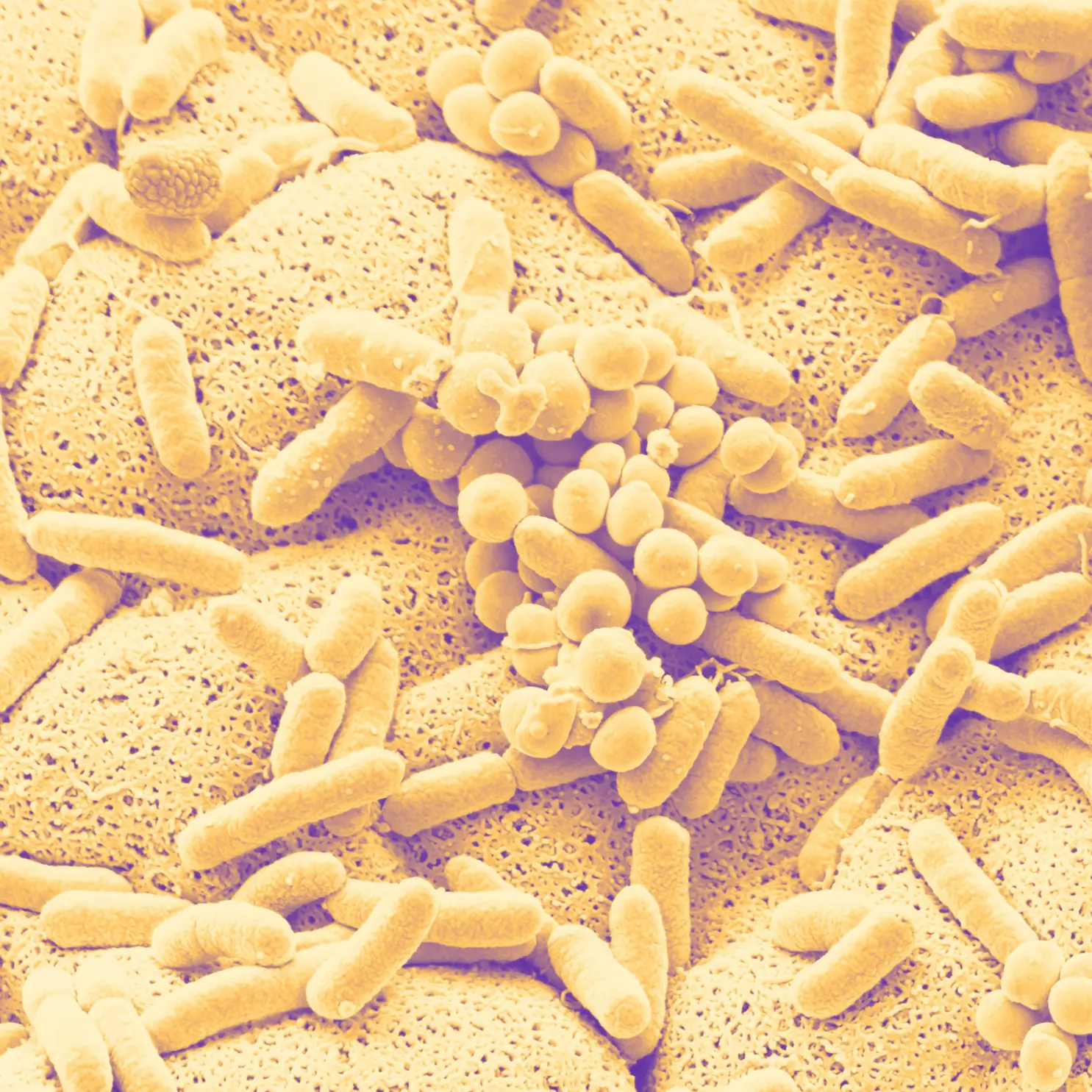
The product is tested against panels representing the commensal and opportunistic-pathogen communities of the target body area — it must not disrupt the beneficial residents or favour the pathogens, it must maintain their equilibrium.
- 4
Step 4 — Ex-vivo community testing
Using volunteer-swab-derived strains, we assess the product's effect on the relative populations and biodiversity of a real human-derived community of microorganisms.
- 5
Step 5 — Reporting & certification
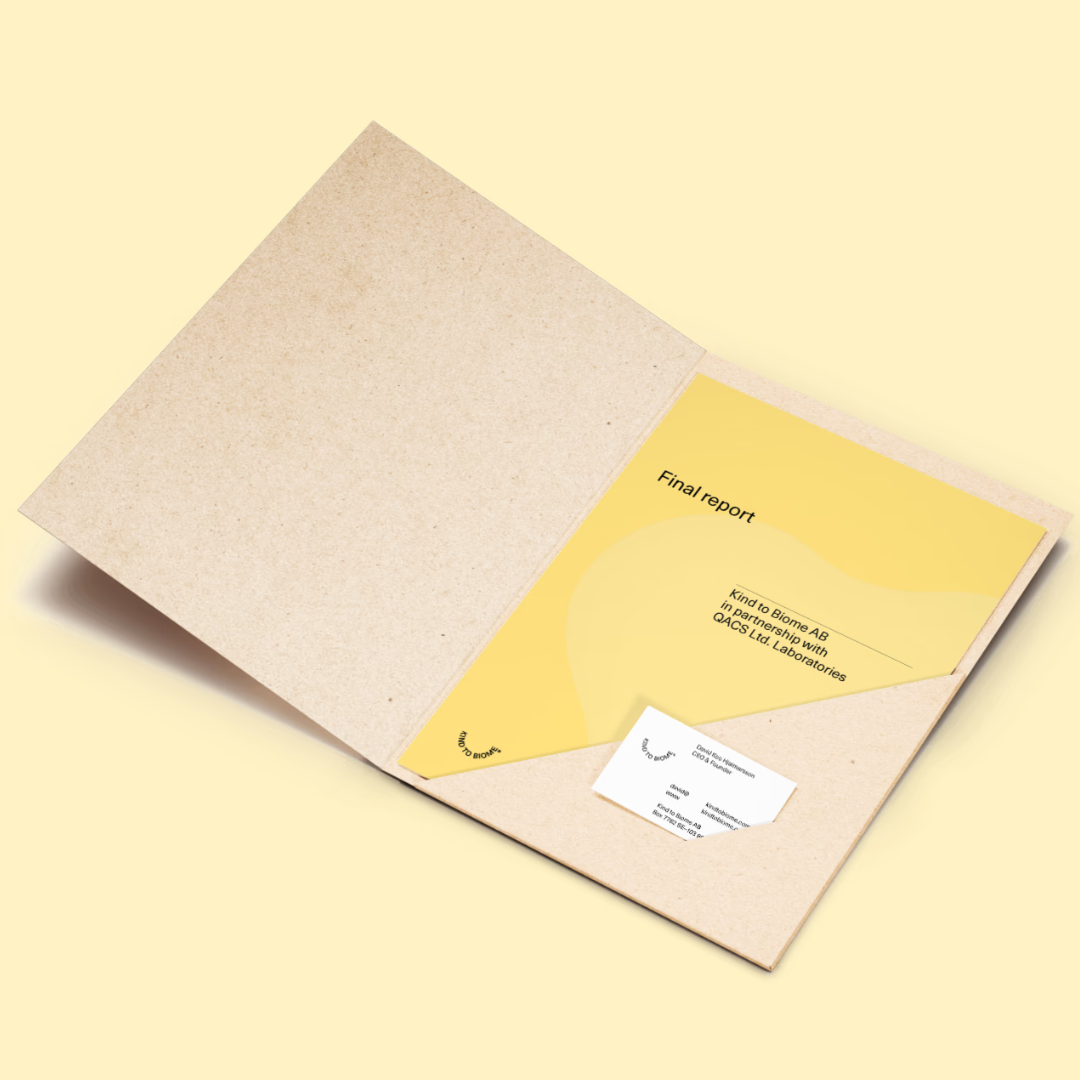
You receive detailed per-phase reporting and, on a pass, the KIND TO BIOME Seal of Quality and certificate as well as the substantiated microbiome-friendly claims that come with it.
Claims you can make on a passing certification
A KIND TO BIOME certification substantiates non-modulating, microbiome-friendly claims such as:
- “Skin microbiome gentle”
- “Skin microbiome-friendly”
- “Does not disturb / interfere with the all-important skin microbiome”
- “Respects the natural microbiome of healthy skin”
- “Maintains the microbiome balance of healthy skin”
These are, today, defensible microbiome claims a cosmetic can make, they align with the EU regulatory definition of cosmetic function and rest on adequate, reproducible evidence*[1][2]
*provided that the wording, product context and product-specific evidence comply with the local applicable cosmetic-claim requirements.
Looking to make an active modulation / breakthrough claim (“rebalances,” “improves diversity”)? That needs in-vivo evidence — see In-Vivo Studies.
What you receive
We help you pass — and formulate better
Certification isn't only a verdict; it's an input to better products. We offer formulation support and skin-friendly preservation guidance, so a near-miss becomes a clear path to a compliant, microbiome-friendly formulation rather than a dead end.
FAQs
How long does certification take?
What do I actually receive?
Why do you review my INCI list first?
Does certification prove my product improves the microbiome?
Is this third-party / independent?
Over 500 products tested
500+
products tested
300+
certified products
2–3 weeks
typical turnaround
Selected clients
Reference case
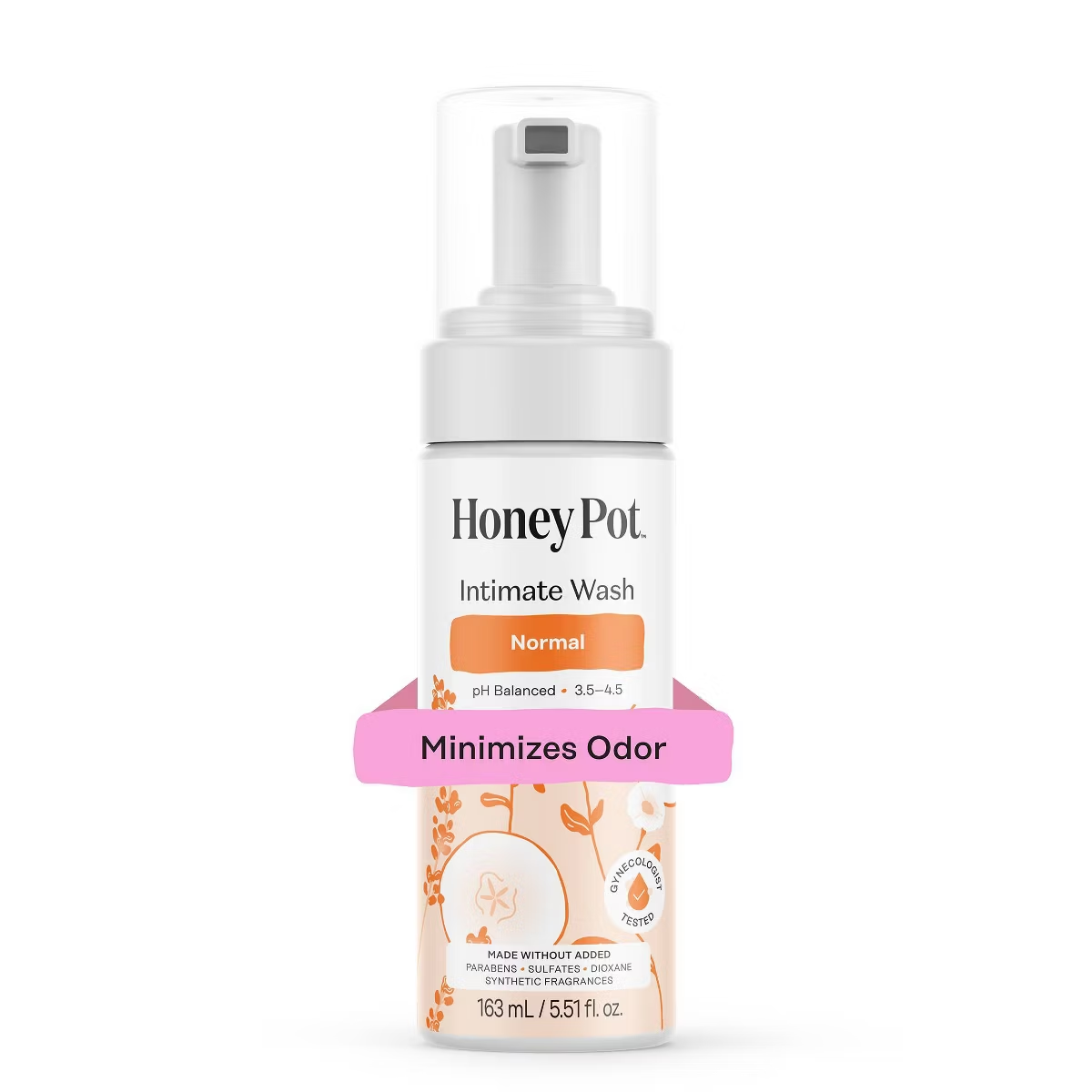
The Honey Pot Company — intimate care, validated end to end
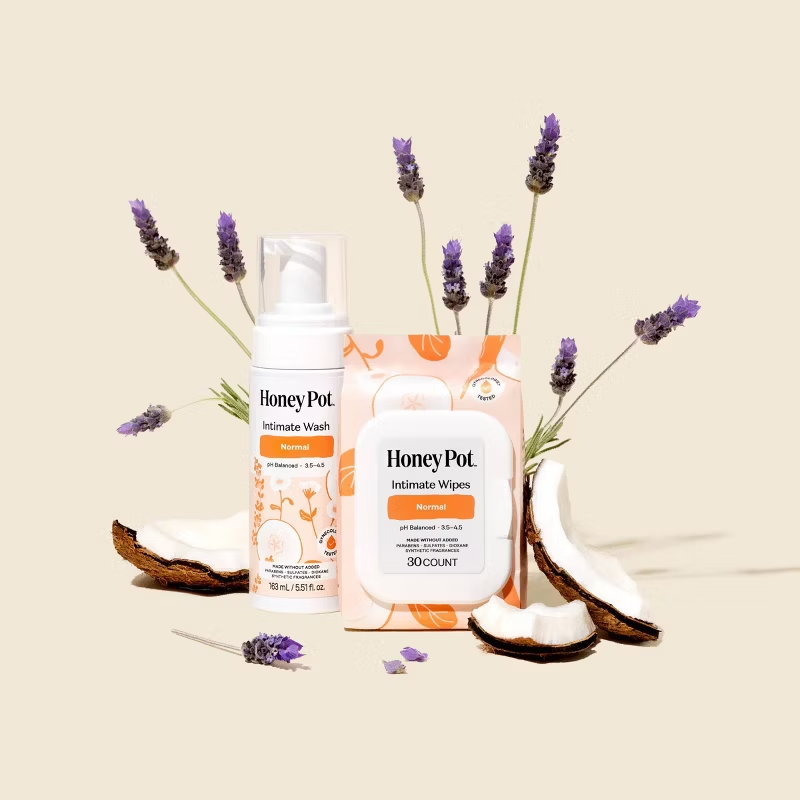
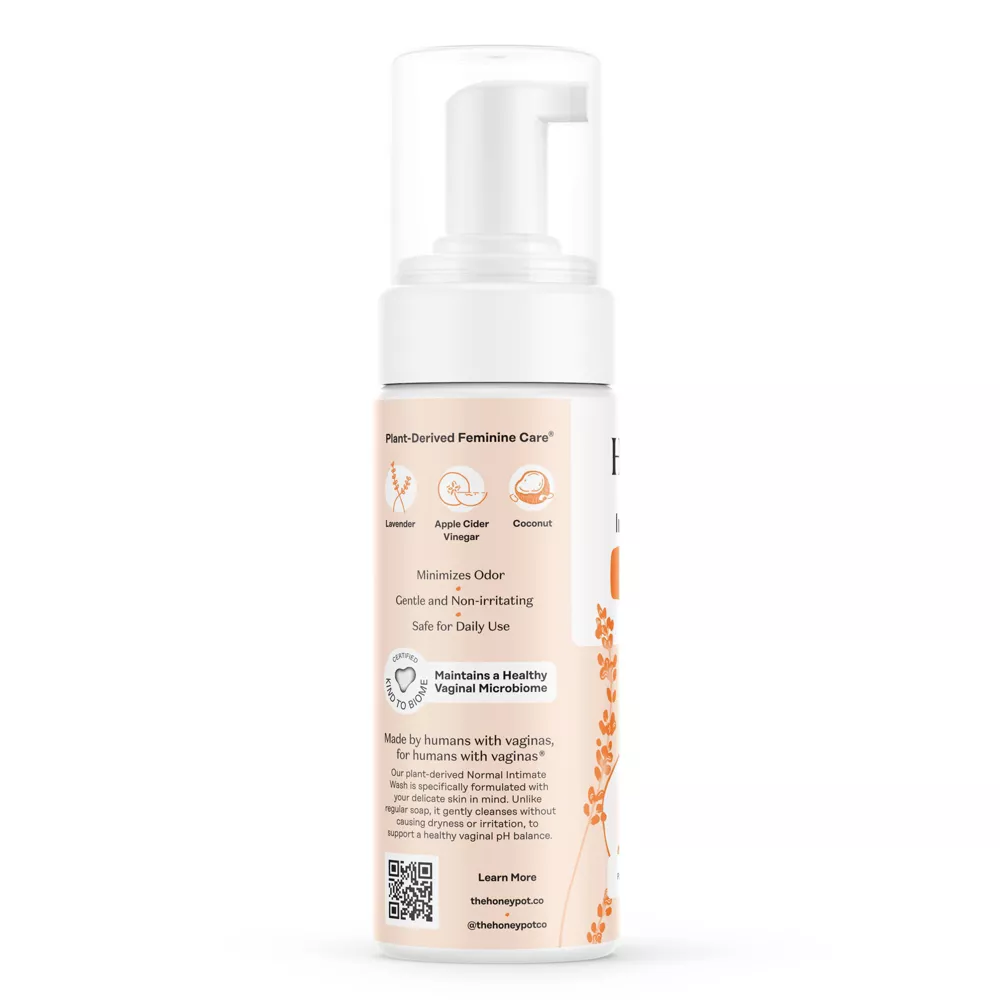
- Intimate-area panel certification
- On-pack: “Maintains a Healthy Vaginal Microbiome”
“KIND TO BIOME provided invaluable insights into understanding the microbiome and assisted us in formulating strategies around effective protocols. We utilized a combination of In Vitro, Ex Vivo, and In Vivo studies to achieve comprehensive results.”
Scientific & regulatory references
- 1.Commission Regulation (EU) No 655/2013 laying down common criteria for the justification of claims used in relation to cosmetic products. Official Journal of the European Union, 2013. (Evidential-support criterion: claims must be supported by “adequate and verifiable evidence,” appropriate to the nature of the claim and reflecting “state of the art,” using valid, reliable and reproducible methods.)
- 2.Regulation (EC) No 1223/2009 of the European Parliament and of the Council on cosmetic products. Official Journal of the European Union, 2009. (Defines a cosmetic product by its action on the external surfaces of the body to clean, perfume, change appearance, protect or keep in good condition — the basis for why non-disruption claims fit the cosmetic definition while active physiological “modulation” invites higher scrutiny. Cross-reference Directive 2001/83/EC on the medicinal-product borderline.)
- 3.Byrd AL, Belkaid Y, Segre JA. The human skin microbiome. Nat Rev Microbiol. 2018;16(3):143–155. doi:10.1038/nrmicro.2017.157 (PMID: 29332945). (Establishes skin community complexity and high inter-individual/site variability — why controlled, reproducible methods matter and why in-vivo modulation must be shown longitudinally.)
- 4.Taléns-Visconti R, et al. Cosmetic interventions for skin microbiome modulation: current strategies and future directions. Skin Res Technol. 2026. doi:10.1111/srt.70352 (PMID: 41988834). (Reports that properly formulated cosmetics generally do not induce major dysbiosis in healthy skin — the non-modulation baseline — while active modulation benefits are the domain of advanced formulations supported by clinical study.)
- 5.Xu DT, et al. Microbiome data variation depending on sampling methods in acne vulgaris. Front Immunol. 2025;16:1566786. doi:10.3389/fimmu.2025.1566786 (PMID: 40552289). (Different sampling methods yield significantly different in-vivo microbiome results — underscoring why in-vivo modulation studies must be tightly controlled, and why a controlled ex-vivo protocol is a clean way to answer a non-disruption question.)
- 6.ISO 17516:2014 — Cosmetics — Microbiology — Microbiological limits. International Organization for Standardization, 2014. (The purity standard applied in Phase 1: TAMC / TYMC limits.)