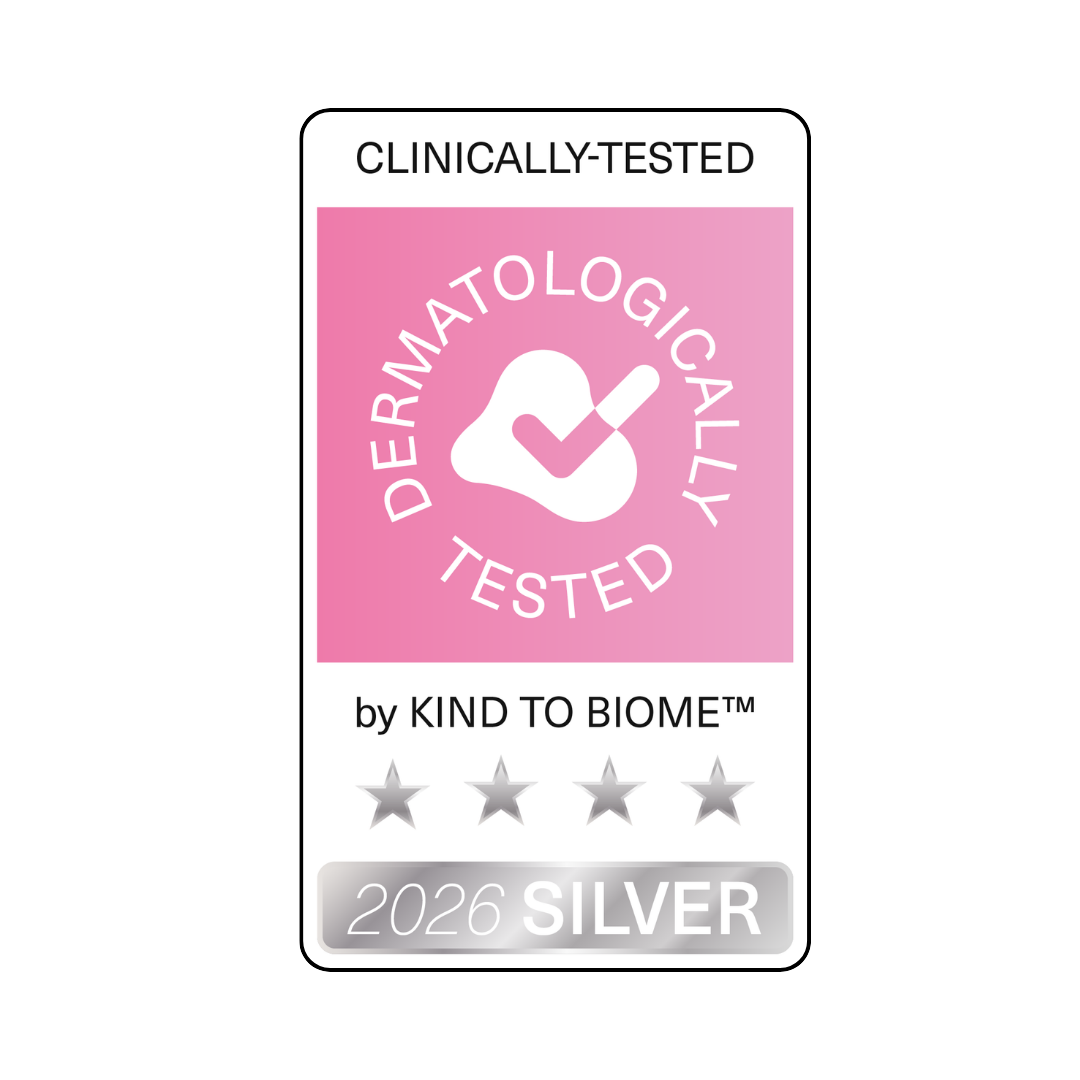
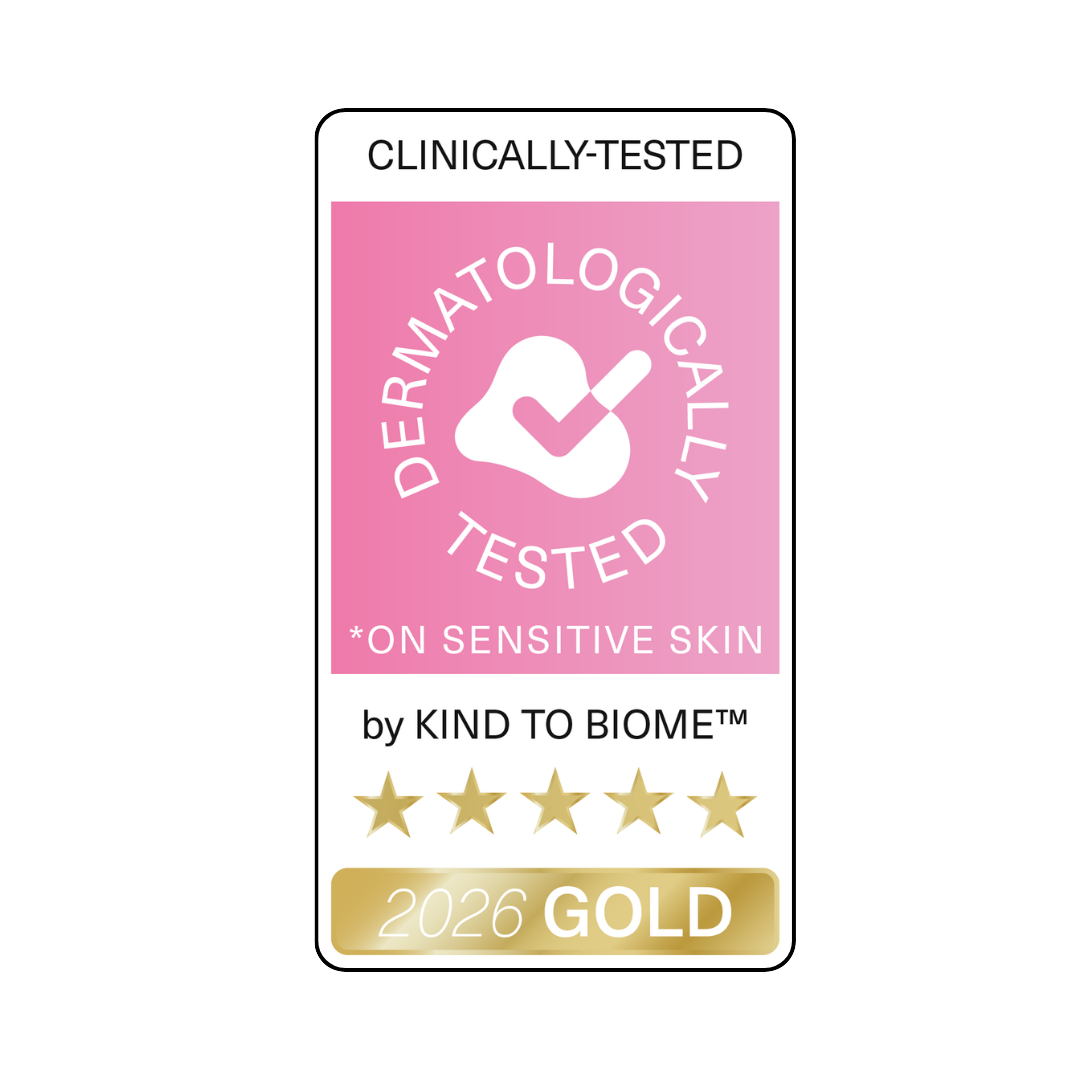
Dermatologically-Tested
clinical verification of skin compatibility and tolerability, via controlled occlusive patch testing under dermatological supervision.
Clinical dermatology & allergy testing
Independent, clinically-tested seals from KIND TO BIOME, run under dermatology and allergy specialist oversight. We verify skin compatibility and, uniquely, answer both halves of the allergy question, is the product designed not to sensitise, and does it not sensitise on real skin. For any product with direct, prolonged skin contact.
clinical verification of skin compatibility and tolerability, via controlled occlusive patch testing under dermatological supervision.
verification of low sensitisation potential, built on two complementary studies rather than one, so it protects both the first-time user and the already-sensitised consumer.
Dermatologically-Tested Seal
For products with direct, prolonged skin contact — based on controlled occlusive patch testing on human volunteers, under dermatological supervision.
20 + 10
normal + sensitive skin volunteers
Adds a sensitive-skin cohort for higher clinical relevance — the evidence behind a “tested on sensitive skin” positioning.
20
volunteers (normal skin)
Confirms good skin tolerability.
Allergy-Tested Seal
Most allergy testing answers only half the question — and sells it as the whole. Sensitisation risk actually breaks into two distinct questions, and each needs a different study:
Our formula-based Sensitising Potential Study reasons at the ingredient level, screening the composition against known and suspected skin sensitisers. This is hazard-based evidence, and it’s the only way to protect the person who is already sensitised, who can react to trace amounts far below anything a human panel would ever flag.
Our in-vivo HRIPT (Human Repeated Insult Patch Test, 50 volunteers) tests the finished product on live human skin under repeated, exaggerated exposure, capturing formulation effects, penetration and interactions that no paper review can see. This is response-based evidence, at the level of the real product.
Complementary coverage across both axes
HRIPT alone.
A product can pass on a generally-naive panel while still containing a recognised sensitiser. HRIPT is weighted toward induction in naive volunteers, so it’s structurally weak at protecting the already-sensitised consumer, exactly the person an allergy claim most needs to protect.
Formula study alone.
A composition can be clean on paper, but paper cannot observe the finished product on skin. You get a defensible hazard verdict with no empirical confirmation.
Both together.
The formula study protects the sensitised and catches known-hazard risk the panel misses; the HRIPT confirms the real product and catches formulation surprises the paper misses. Each closes the other’s blind spot.
The bottom lineoffering both is the only configuration that substantiates the full allergy claim set and protects both the first-time and the already-allergic consumer. Anyone offering one is selling a partial answer as a whole one.
HRIPT study conditions
50 healthy adult volunteers, controlled clinical environment, dermatology & allergy specialist oversight.
HRIPT method
An induction phase of repeated occlusive applications over roughly three weeks, a rest period, then a challenge application.
Formula-based Sensitising Potential Study
Screens the full composition at ingredient level against recognised skin-sensitiser references:
Scope.
We agree the right study set for your product and target claims — dermatological compatibility (Silver/Gold), the formula-based Sensitising Potential Study, the HRIPT, or the full combination.
Design & recruit.
We recruit the appropriate panel under dermatology and allergy specialist oversight.
Study phase.
Controlled, occlusive, standardised application and expert assessment; for HRIPT, the full induction → rest → challenge sequence.
Report & seal.
A full documented expert report and, on a pass, the clinically-tested seal(s) to display.

Turnaround: HRIPT runs several weeks by design because of the induction + rest + challenge phases; the formula study is faster. (Exact turnaround to be confirmed.)
These studies substantiate skin-safety and tolerability claims that sit on the cosmetic side of the line. Wording still matters and should be signed off by a regulatory adviser per market. Guidance, not legal advice.
The takeawaya formula study proves the product was built not to sensitise; an HRIPT proves it doesn’t on real skin. One earns the design-out logic behind “hypoallergenic” and protects the already-allergic; the other earns “dermatologically tested” and confirms the finished product empirically. We help your regulatory lead land the strongest wording the evidence can defend — and stay the right side of the ceiling.
Use it when:
your product has direct, prolonged skin contact — leave-on skincare, deodorants, intimate and baby care, body care, makeup — and you want independent proof of tolerability and low sensitisation potential for retailer listings, marketing and dossier support.
Reach for both allergy studies when:
you intend to make a “hypoallergenic” or strong low-allergy claim, or your audience includes sensitive and allergy-prone consumers.
Who it's for:
brand, R&D and regulatory leads preparing a launch or a retailer submission.
Selected clients