
Stop the signal being made
— inhibit the enzymes bacteria use to synthesise autoinducers.[4]
Quorum quenching & Cutibacterium acnes
Quorum quenching is a targeted way to disarm bacterial virulence without carpet-bombing the skin's ecosystem. Our Quorum Quenching Assay lets you measure, and substantiate, a formulation's ability to disrupt Cutibacterium acnes biofilm and cell-to-cell signalling, so your actives can claim mechanism, not just marketing.
The mechanism
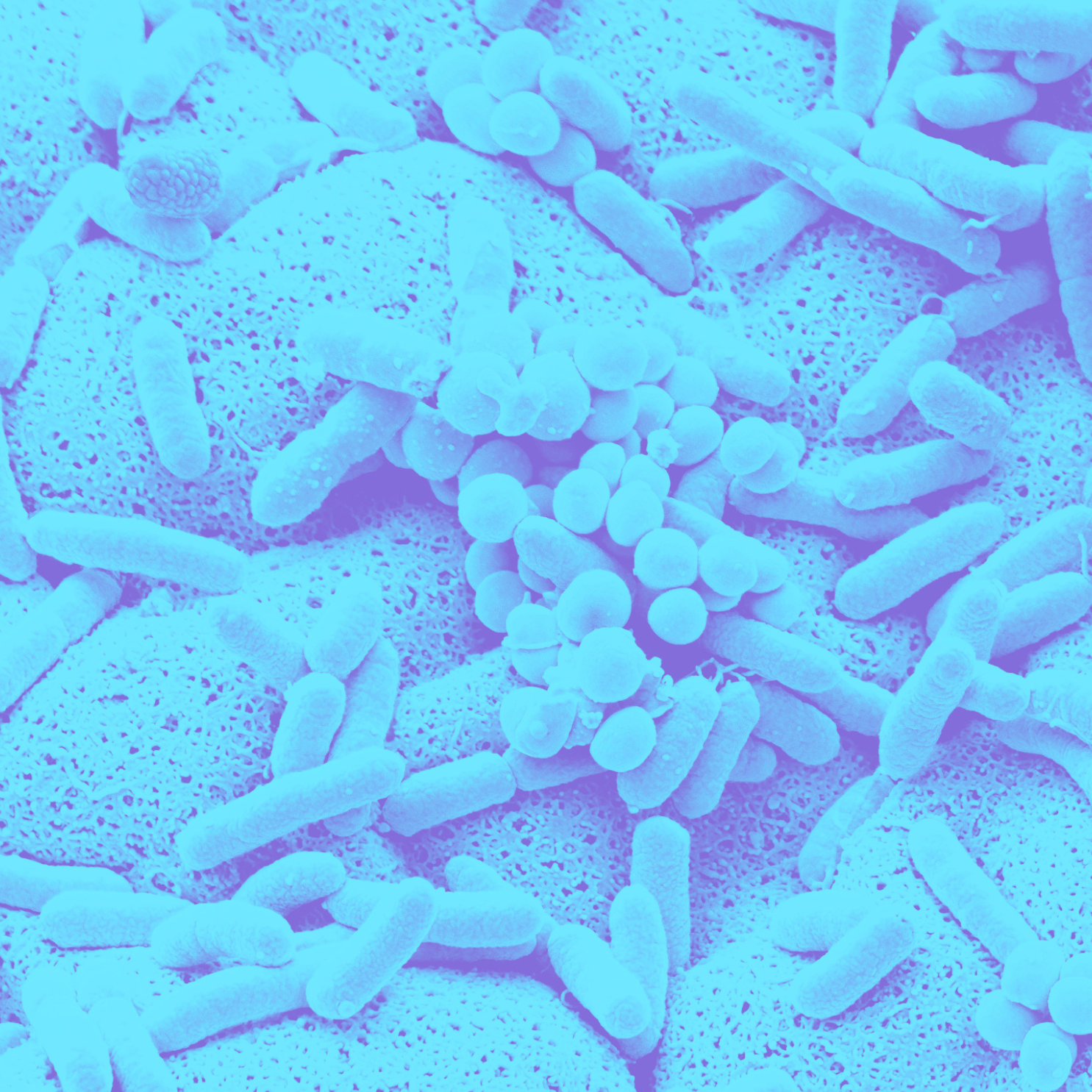
Bacteria don't act as isolated cells. They release small chemical signals, called autoinducers, that accumulate as the population grows. Once the signal concentration crosses a threshold, the whole community “knows” it has reached a critical density and switches on collective behaviours in unison. This density-dependent communication is called quorum sensing (QS).[1][2]
QS is the master switch behind the behaviours that matter most in skin health: biofilm formation, the release of virulence factors, and coordinated shifts in metabolism.[1][3] Different bacteria speak in different chemical languages, Gram-negative species largely use acyl-homoserine lactones (AHLs), Gram-positive species use autoinducing peptides (AIPs), and a shared signal (AI-2) lets different species eavesdrop on one another.[2][3] On the skin, this cross-talk is not just noise: it actively shapes which organisms dominate and how the barrier holds up.[11]
The intervention
If quorum sensing is the conversation, quorum quenching (QQ) is jamming the line. Rather than trying to kill bacteria, QQ interferes with their ability to coordinate, so the population never reaches the “switch on virulence” decision.[4]
There are three well-characterised ways to quench a quorum, and a formulation can exploit any of them:[4][5][6][7]
— inhibit the enzymes bacteria use to synthesise autoinducers.[4]
— quorum-quenching enzymes such as lactonases and acylases hydrolyse and inactivate the signalling molecules before they can be read.[5][6]
— quorum-sensing inhibitors (QSIs) act as antagonists at the receptor, so even a signal that arrives goes unheard.[7]
Why it matters
Anti-virulence, not antibiosis. Conventional antimicrobials aim to kill. That works, but it applies enormous selective pressure, any resistant cell that survives inherits the whole niche, which is a primary driver of antibiotic resistance. Quorum quenching takes a different route: it “does not aim to kill the pathogen,” it disarms it.[6] By targeting virulence and biofilm rather than viability, QQ is widely framed as an anti-virulence strategy that exerts weaker selective pressure and is therefore expected to be far less prone to driving resistance.[6][8][9]
It preserves the ecosystem you actually want. Broad-spectrum antimicrobials don't distinguish friend from foe; they deplete the commensals that keep skin healthy. Because quorum quenching targets a signalling behaviour rather than killing cells indiscriminately, it can quiet a problematic behaviour while leaving the wider community standing, the difference between a scalpel and a scorched-earth approach. This is exactly what makes QQ compelling for microbiome-friendly product design.[6][10]
The skin already does this. Quorum quenching isn't a synthetic trick imposed on skin, it's a mechanism the skin microbiome uses to police itself. Commensal skin staphylococci produce autoinducing peptides that quench the Staphylococcus aureus agr quorum-sensing system, suppressing toxin production and protecting the skin barrier; in atopic dermatitis, a lower ratio of these commensal quenching signals to S. aureus tracks with worse disease.[11] A formulation that supports quorum quenching is working with the skin's own regulatory logic, not against it.
The acne case
Acne is where the case for quorum quenching is strongest, and where the older “just kill C. acnes” model has most clearly broken down.
37% vs 13%
C. acnes macrocolonies/biofilms in acne facial biopsies versus controls — odds ratio 3.85.[16]
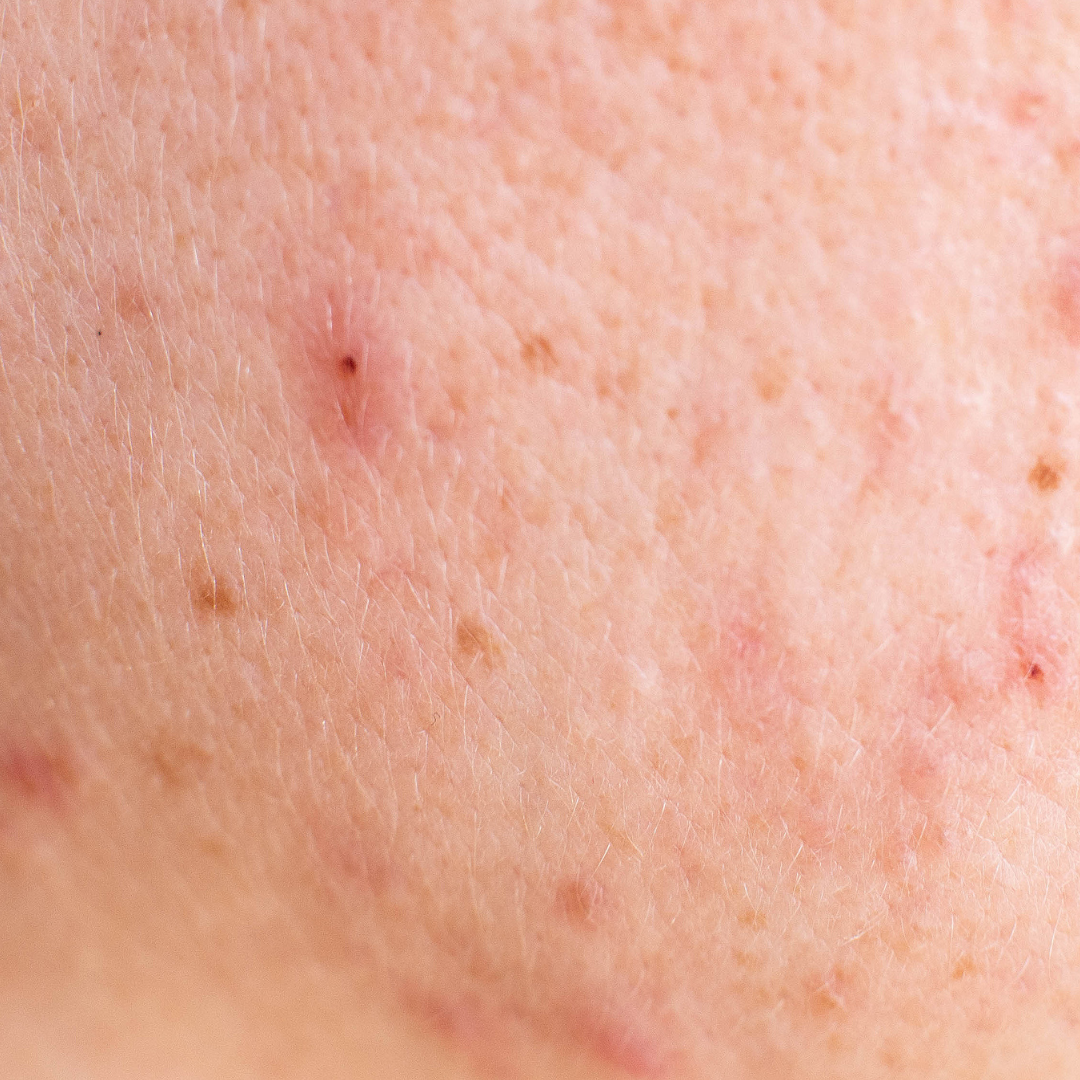
It's dysbiosis, not overgrowth. Cutibacterium acnes is a lifelong skin commensal, present on healthy and acne-prone skin alike. Landmark metagenomics showed that overall C. acnes abundance is similar between people with and without acne, what differs is the strain population structure, with specific lineages enriched in acne.[12] The field has since reframed acne as a loss of balance between C. acnes phylotypes and a broader dysbiosis of the skin community, rather than simple bacterial overgrowth.[13][14] That reframing is decisive: if the problem is imbalance, then indiscriminate killing is the wrong tool, and rebalancing is the goal.
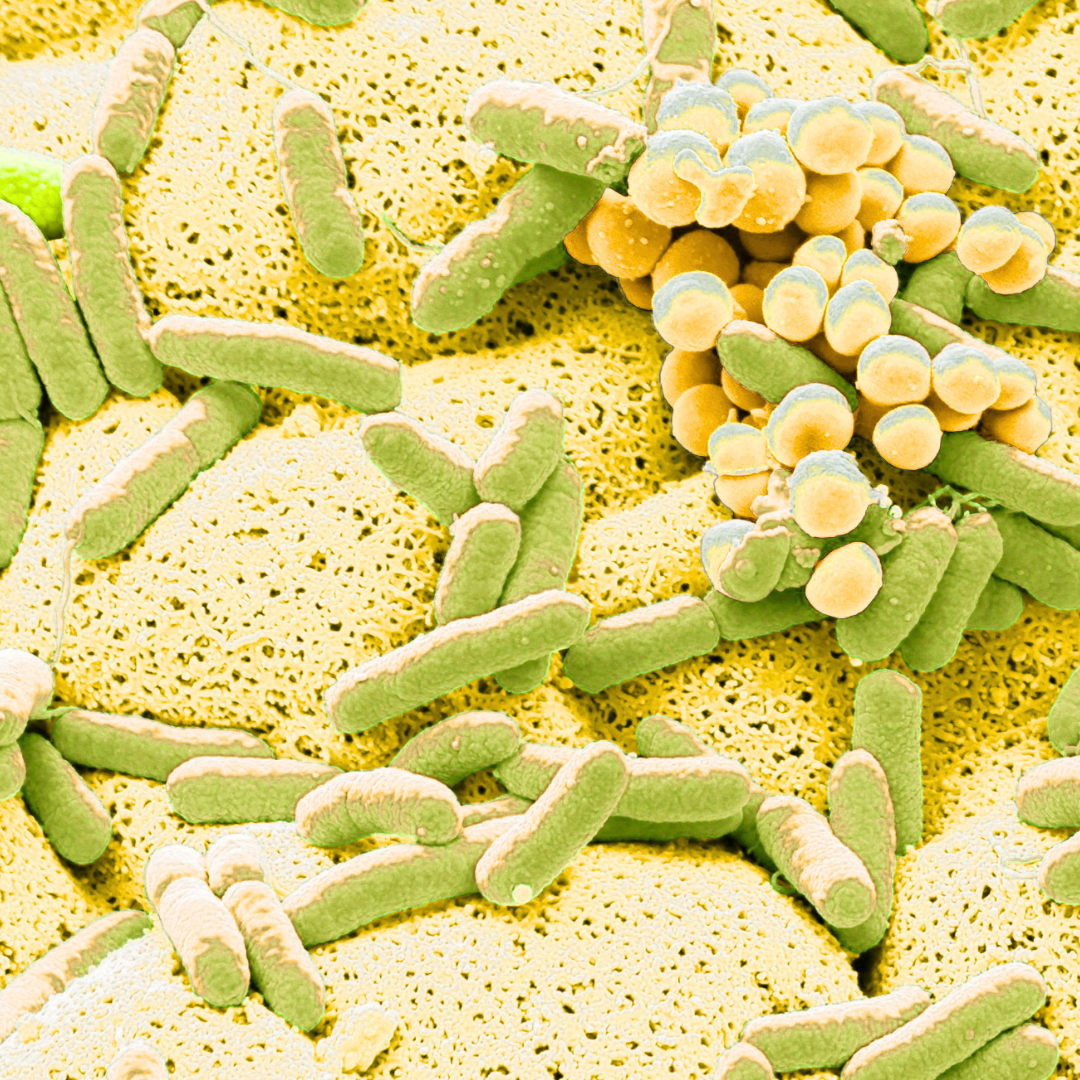
Biofilm is the persistence engine. C. acnes readily forms biofilms in the pilosebaceous follicle, and biofilm is strongly implicated in acne persistence, inflammation and treatment failure.[15] In facial biopsies, C. acnes was found as large macrocolonies/biofilms in 37% of acne samples versus only 13% of controls (odds ratio 3.85).[16] Biofilm-embedded cells are markedly more tolerant to antibiotics, and specific virulent phylotypes combine efficient biofilm formation with increased antibiotic tolerance and inflammation.[15][17] Break the biofilm and you undercut both the persistence and the tolerance.
Quorum sensing is the trigger. C. acnes behaves like a well-mannered commensal at controlled densities and turns pro-inflammatory as its population and signalling rise, a quorum-driven switch from “safe” to “danger.”[18] Quenching that signal targets the trigger, not just the symptom.
Proof of concept already exists. Natural actives are being shown, in vitro, to hit exactly these targets, inhibiting C. acnes biofilm and quorum signalling (including AI-2), reducing inflammatory mediators, and in several cases doing so without directly killing the bacteria, i.e. without collateral damage to the microbiome.[19][20][21] The mechanism is real and formulatable; what brands need is a way to measure it in their own products.
(See our Acne-Targeting page.)
The KIND TO BIOME Quorum Quenching Assay
We developed the Quorum Quenching Assay to evaluate formulations and individual ingredients for their ability to disrupt C. acnes quorum sensing and biofilm formation, the molecular events that turn a skin commensal into a driver of acne.[15][16][18]
Instead of a blunt “does it kill bacteria” readout, the assay characterises what actually matters for microbiome-friendly acne care: whether your product interrupts the signalling and biofilm behaviours that underlie virulence, ideally while leaving the commensal community intact.[6][11] The result is mechanistic evidence you can stand behind, the “adequate and verifiable evidence” that EU cosmetic-claims rules require.[22]
What you get
Claims
An assay doesn't hand you claims; it hands you evidence, and with a mechanism this specific, how you frame the evidence matters as much as the result. Below is where the most defensible language tends to sit, and where the lines are.
This is territory a “kill everything” antimicrobial can't credibly occupy. When the assay shows your formulation disrupts C. acnes signalling and biofilm, it becomes reasonable to discuss:
Not in the traditional sense. Antibacterials kill or stop bacteria from growing; quorum quenching disrupts how bacteria communicate and coordinate, so it can switch off virulent behaviours like biofilm formation without needing to kill the cell.[4][6] That's why it's described as an anti-virulence strategy.[8][9]
C. acnes is a normal, largely beneficial resident of healthy skin — acne is linked to an imbalance between strains and a disturbed microbiome, not simply to too much C. acnes.[12][13][14] Killing it indiscriminately can disturb the ecosystem you want to protect and adds selective pressure that favours resistance.[6][8] Quenching the signal targets the harmful behaviour while aiming to leave the community intact.[6][11]
Yes. Quorum sensing and quorum quenching are extensively characterised in the microbiology literature [1][2][4]; C. acnes biofilm is significantly more prevalent in acne skin than in controls [16]; the skin's own commensals use quorum quenching to protect the barrier [11]; and multiple natural actives have been shown in vitro to inhibit C. acnes biofilm and signalling.[19][20][21] Our assay lets you generate this evidence for your formulation.
Both — we evaluate formulations and individual ingredients for their effect on C. acnes biofilm formation.